French has taken a bit of a back seat in the past three months. After a promising start it's become quite hard to get back from work and down to French in the slot before starting to cook and things like that.
Something I have found enjoyable to fit into the cracks has been Codecademy which is an online course to help teach computer coding. I still feel a complete dunce, but the course is well structured. I feel that now that I'm actively trying to grasp more of an understanding, I'll be allowed to purchase a circuit board from Raspberry Pi when they reach the market at the end of the month. Raspberry Pi are a UK foundation that are manufacturing credit card-sized computers that run Linux (with components similar to those found in a simple smart phone all for between $25 and $35, the latter with ethernet and more RAM. I applaud them for seeing a need - namely a lack of programming opportunities among school kids - and then seeing through the filling of that need. That's entrepreneurism in practise.
Over the past month or so there have been a number of articles on the internet about Bible translation. Here are links to all the ones that I have come across.
The Bible should be available to read in every Christian's native language
Here
is a comment piece written by the Director of Wycliffe Bible
Translators UK. It's a good introduction to the issues and arguments
for Bible translation.
The Bible Society of the West Indies translated the Bible into Jamaican
patois. But traditionalists on the island have accused them of
dumbing-down the scriptures. The BBC's religious affairs correspondent
Robert Pigott reports, the project has awakened fierce controversy over
the role Patois should play in Jamaican national identity.
It seems to me that the question here is not so much whether the finished Bible is more understandable, but whether Scripture is too 'holy' for some languages. Translating the Bible into certain dialects in Britain would probably get similar responses, perhaps because we would say Jesus would never have put a glottal stop in place of a 't' - he was perfect in every way, even in pronunciation.
Zambian farmers learn to write their Shanjo language
For the first time stories passed down through the generations by word of mouth are being written down.
In the first exercise undertaken by the Shanjo translators,
they were asked to use the Latin alphabet to write out advice on the
benefits of training oxen.
It was wonderful to come into the office a few weeks ago and see this article on the BBC News Website. I first met James Lucas in 2006 when he was taking some training in Language and Culture Acquisition. It's exciting to see how the language that is perhaps perceived as having held them back is becoming a tool to wider development. I think of a Shanjo farmer trying to comprehend the number of people who have read this article about his language, a language that few people in Zambia may even be aware of. And in the future, maybe that farmer's children will be able to begin school in the Shanjo language, learning to speak the national language through their mother tongue, going on to be successful and break out of poverty without needing to turn their back on their cultural identity.
Today I've two things to blog about. Firstly, for those of you who pray, do so for the Democratic Republic of the Congo tomorrow (Monday 18th November) as they go to the polls. Heather Pubols has already written a nicely comprehensive blog post on the election here. One Friday, those of us in Nairobi who work with colleagues in eastern Congo met together for a thanksgiving afternoon meal and time of prayer. Four weeks ago I was a little uncertain what we would be hearing by this point in the build-up, but when it came to our time of prayer I'm pleased to report that there have been no specific issues for prayer coming our way. So pray tomorrow and hold the DRC in your thoughts through to the 6th December when I believe the results will be announced.
I was reading earlier last week from Studies in the Sermon on the Mount by Dr Martyn Lloyd-Jones. As I was reading his comments on 'you are the salt of the earth', I thought about DRC. In thinking about the preserving properties of salt (and the flavourful properties too), and seeing that this is what Christians are called to, it sometimes seems that there is not enough salt to go around and that those who are Christians may often not be salty enough to 'preserve' the societies that we are in. I'm challenged as I continue thinking on this.
Secondly today, I wanted to introduce our new washing machine. I say 'machine', but in fact I mean twin-tub. We picked it up off a colleague who is in the process of relocating from Nairobi and after a wait that seemed like a life-time, here she is:
The tub on the left is for washing clothes. It has some fins on the bottom that swoosh the washing round. On the dial above is a timer going up to 15 minutes which is good old-fashioned non-electric style. You can see in the photo that a hose is in the tub - that's our shower attachment which is doing the job of filling it with water. Emptying is done like a normal machine, but into our bath.
The right tub is a spinner. Chuck in a few pieces of clothing and let it spin them for a few minutes. Because of having separate tubs and things, we now have an order to be getting used to which goes like this:
Fill
Wash
Drain
Spin
Fill
Rinse
Fill
Rinse (hopefully clean rinse water coming out the machine by this point).
Spin
It doesn't need too much watching over and having a machine like this will save many a collar on a T-shirt from become warped and twisted while hanging sodden on a washing line. We're very thankful.
After a few
weeks break it's nice to sit down to writing a new blog post. I've spent a fair
amount of time recently looking towards to future. Next July Janet and I will
be back in the UK for perhaps about a year. It's a good opportunity to think
about doing some further studies. So I'm wondering what direction to
go in, and this comes down to what I want to specialise in for the next few years.
So here are a few different initial thoughts from my free-thinking.
Possibility
number one would be something like a Post-graduate Certificate in Human
Resource Management. Currently I’m on the fringes of the personnel with one of my roles. I’m
not sure whether I could say that I have a calling to personnel work, but I see
that there is a value in it and that somebody needs to be doing it. I like to get away from communing with my computer
and with a personnel future I’d spend a fair chunk of my time servicing e-mails,
though also with regular opportunities to encourage, mentor and debrief staff. As
with all these possibilities, they all provide the opportunity to get a
qualification that leads down a real career path, something which I haven’t had
these past few years.
Possibility
number two is slightly more unshaped at the moment. It’d be in databases and in
particular online databases. One of the things that really engages my mind is
the organisation of information. This is quite ironic as I’m generally quite a
messy person and even find it hard to organise my e-mail and hard drives. Trying
to organise data on institutional funders was one of the first projects I began
on arriving in Kenya. I got some way with capturing useful data in an Access
database but, querying that data to find appropriate funders was a bit beyond
me. In a global organization what is really needed is the ability of someone in
the United States, for example, to be able to attend a meeting in which a
certain funding opportunity is raised, enter the information on what activities could be
funded and where, funds available and criteria and then for myself or others in
Africa to have the opportunity flagged up while it is current. Wouldn’t this be a wonderful
way for staff around the world to be aiding each other – essentially through a
customised Customer Relationship Management system. There would be a number of
challenges with taking on a course in databases. I suppose I would need to
learn at least one computer language – maybe HTML and SQL as well as specialist
software. Despite saying how much this engages me, it’s fair to say that I’ve never
motivated myself in learning these skills before so I cannot assure myself of succeeding. That would be the big question. Courses I’m looking at include
e-Business which has a nice and wide remit – maybe too wide – and also Internet
and Database Systems.
Possibility
number three would be to get more skills in communications – a course in HTML
so that I can do some webpage design and another in something like Photoshop. I
enjoy spending my time designing publications but I’m constrained by not knowing enough. Maybe these sort of courses would help me blossom more
in this area.
So these
are my initial thoughts. It seems like this year has brought with it the
realisation and renewed impetus in learning. I don't feel particularly academic, but I think that as long as I carefully look at the available courses and take advice on which course to enrol on I could be successful.
This blog post I first published in March 2009. It's reflections on a speech given by Steve Jobs. It seems fitting and right to give him the floor today in the wake of news of his death.
Steve Jobs – one of the most remarkable innovators of our time. A man with a cult following, so much so that his health has an almost direct influence of Apple’s share price. Not only do his computers sit at the heart of many peoples lives, but the films of Pixar – of computer animation fame which he founded – have made billions laugh and cry over the past couple of decades.
In this posting I want to bring to you the commencement speech (like graduation) he made on 15th June 2005. In the speech he gives three stories. Watch, listen, and think.
His first story was about joining the dots. Adopted at birth, he was a young man with no idea what to do with his life. And so he looked for what he could be passionate about.
“You can't connect the dots looking forward; you can only connect them looking backwards. So you have to trust that the dots will somehow connect in your future. You have to trust in something — your gut, destiny, life, karma, whatever. This approach has never let me down, and it has made all the difference in my life.”
For us as Christians we see that though we may plan, it is God who directs our steps and he is at the helm. “In his heart a man plans his course, but the LORD determines his steps” Proverbs 16:9.
Steve Jobs goes on to say that “Your work is going to fill a large part of your life, and the only way to be truly satisfied is to do what you believe is great work.” In the Bible we see that to love what we do is a gift from God. “…to accept his lot and be happy in his work—this is a gift of God. He seldom reflects on the days of his life, because God keeps him occupied with gladness of heart” Ecclesiastes 5:19b-20.
His second story is of love and loss. Getting fired from his own company. Getting fired from your own company is not too dissimilar to the experience of God with the Israelites – they rejected God and instead followed religion – the laws God had given them, but without giving glory to God – or idols. In Isaiah we see that god has not forgotten his people and he is making a way to call them back to himself. “But as for you, Israel my servant, Jacob my chosen one, descended from my friends Abraham, I have called you back from the ends of the earth so you can serve me. For I have chosen you and will not throw you away.” Isaiah 41:8-9
The third story Steve Jobs shares is about death. The maxim that he has taken through life is that “If you live each day as if it is your last, someday you’ll most certainly be right”. He goes on to say that “Remembering that you are going to die is the best way I know to avoid the trap of thinking you have something to lose. You are already naked. There is no reason not to follow your heart.”
In the Bible, Job [no relation to Steve] learnt this firsthand when his family was hit by trials – Job 1:21 “I came naked from my mother’s womb, and I will be stripped of everything when I die. The LORD gave me everything I had, and the LORD has taken it away. Praise the name of the LORD!”
Paul in one of his letters says that ‘I eagerly expect and hope that I will in no way be ashamed, but will have sufficient courage so that now as always Christ will be exalted in my body, whether by life or by death. To live is Christ, and to die is gain’ Philippians 1:20-21.
Back to Steve Job: “Your time is limited, so don’t waste it living someone else’s life.” So often as Christian’s we look around at those around us, and we aspire to be them – to have their personality, giftings, luck, girlfriend, boyfriend or maybe just their good smile. As Christians we all have a part to play in the Body of
Christ – that collection of all believers under the headship of Jesus.
So that’s some thoughts on Steve Job’s speech. And his closing remark of “Stay hungry, stay foolish”? Well, Paul writes “We are fools for Christ, but you are so wise in Christ! We are weak, but you are strong! You are honored, we are dishonored! To this very hour we go hungry and thirsty, we are in rags, we are brutally treated, we are homeless.” 1 Corinthian 4:10-11.
Will we chose to stay hungry and foolish for God and his Kingdom?
Results-Based Management Planning is loved by some and probably not by some others. Last week, at a seminar called 'Animating the RBM planning model' (part of a larger workshop on monitoring, reporting and evaluation), someone dug up this video which came from a planning meeting in Tanzania [listen for the rain and chirping noises in the background - wonderful]:
I've spent a bit of time clearing out a box of papers this weekend (in between excitedly checking up on the Christmas cake in the oven which has turned out very nicely, hence the papers still sitting strewn across the room).
I've also spent some time sorting out a phone to be passed on to a Kenyan friend of Janet's. It was a nice enough Samsung Windows Phone with a sad past - earlier this year I woke one morning to find the charger (which the phone was attached to) in two pieces after what I'm told was probably a power surge following a lightening strike. The phone still worked but would no longer charge. Thankfully a seperate battery charger pack has allowed the phone to not be completely defunct and so it is nice to be able to give it a new home.
Here's a phone camera photo for nostalgia:
Standing on a chair on a pitched roof, setting up the aerial.
Here's one of the few pieces of wedding memorabilia that Janet and I have with us in Kenya. It was a gift from one group of staff that I work closely with who are based in Eastern Congo. We've hung it in the window close to the front door where we hope it'll be safe from knocks. It'll get the morning light, which I'll see if I draw the curtains in time.
One item we did bring back from the UK was a breadmaker. It makes a small loaf which is moreish enough that we finish it between the two of us. This evening the maker helped us whisk up some dough for pizzas. I was interested to see if Janet could fit it in a suitcase, but thankfully it slotted in snuggly.
Today we bought one of the gifts that we thought would be the same price in Kenya as the UK - a hand blender. So now we're on course to make some zingy soups with fresh bread. I'm sure I'll be loosing weight in no time...
Tomorrow we also hope to bake a Christmas Cake. A photo will follow, maybe...
I was today reminded of a quote I recently read when Googling to try and work out how to spell Roald Dahl - I cannot now remember why...
The quote popped into my mind in a discussion about maintaining margin - a sufficient reserve of time, energy (spiritual, emotional, interpersonal and physical energy) and money to provide for our needs and the needs of others (to quote Ken Williams of International Training Partners.
I was wondering to myself that I maybe bring home problems and concern myself with how to start the coming day in the office - where to begin and how to move forward.
Roald Dalh, lifting his idea from Earnest Hemingway, a suggests a particular way to maybe circumvent this:
…I never come back to a blank page; I always finish about halfway
through. To be confronted with a blank page is not very nice. But
Hemingway, a great American writer, taught me the finest trick when you
are doing a long book, which is, he simply said in his own words, “When
you are going good, stop writing.” And that means that if everything’s
going well and you know exactly where the end of the chapter’s going to
go and you know just what the people are going to do, you don’t go on
writing and writing until you come to the end of it, because when you
do, then you say, well, where am I going to go next? And you get up and
you walk away and you don’t want to come back because you don’t know
where you want to go. But if you stop when you are going good, as
Hemingway said…then you know what you are going to say next. You make
yourself stop, put your pencil down and everything, and you walk away.
And you can’t wait to get back because you know what you want to say
next and that’s lovely and you have to try and do that. Every time,
every day all the way through the year. If you stop when you are stuck,
the you are in trouble!
It seems very insightful. For me these days, the only other question I would need to ask is "When do I open my Inbox?" Could I really resolve to come to the office each day with a task waiting to be finished and dive straight in? Time will tell.
Maybe my next work insight blogpost will be to explain the wonderful quote: "If some thing's worth doing, it's worth doing badly."
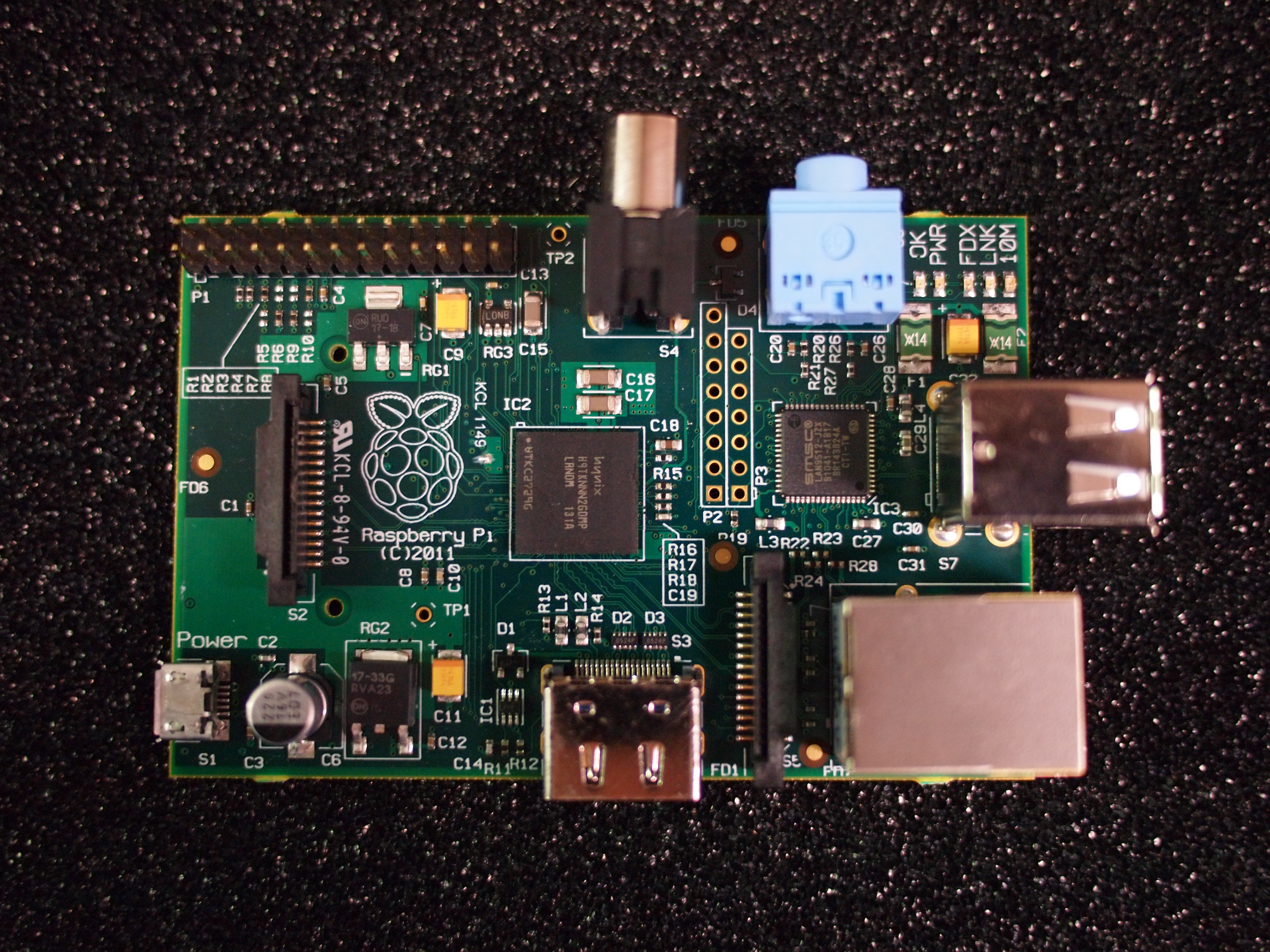 Something I have found enjoyable to fit into the cracks has been Codecademy which is an online course to help teach computer coding. I still feel a complete dunce, but the course is well structured. I feel that now that I'm actively trying to grasp more of an understanding, I'll be allowed to purchase a circuit board from Raspberry Pi when they reach the market at the end of the month. Raspberry Pi are a UK foundation that are manufacturing credit card-sized computers that run Linux (with components similar to those found in a simple smart phone all for between $25 and $35, the latter with ethernet and more RAM. I applaud them for seeing a need - namely a lack of programming opportunities among school kids - and then seeing through the filling of that need. That's entrepreneurism in practise.